Away from the cliché, towards naturalness.
The facelift has been experiencing a marked revival for some years. The reason: modern surgical techniques allow harmonious, natural facial rejuvenation and avoid the typical stigmata of earlier methods such as “over-tightened” features or unfavourable scars. What is decisive is not pulling on the skin, but the anatomically grounded repositioning of descended soft tissue into its original position.

Six principles of facial surgery
-
Repositioning instead of tightening
Natural, harmonious rejuvenation by moving descended soft tissue back into its original position — not by pulling on the skin.
-
A scientific basis
A deepened understanding of connective tissue anchoring (retaining ligaments), gliding planes and SMAS structures.
-
An answer to “filler fatigue”
Growing scepticism towards synthetic filling materials — a wish for sustainable, coherent results.
-
Tension-free skin closure
Mobilisation and repositioning of the descended cheek fat tissue. The skin is adapted at the end with minimal tension.
-
A holistic approach
The entire face and neck as well as volume changes are taken into account in the plan — for example through autologous fat grafting.
-
Avoiding stigmata
No mask-like over-tightening, no visible traces, no change of character.
The anatomical foundations.
The facelift is regarded as a classic procedure of plastic surgery — and has been experiencing a revival in recent years. One essential reason is surgical advances that make better, more natural-looking results possible.
At the same time, scepticism is growing among many people towards an “excess” of synthetic filling materials: unnatural-looking faces frequently result from excessive injections in an attempt to make the face “firm”. Modern facelift surgery deliberately sets a different priority: it corrects tissue laxity through tightening — and replaces volume in order to correct tissue loss, not in order to tighten.
Earlier facelift procedures were sometimes marked by visible stigmata: mask-like features, an over-tightened appearance, displaced hairlines, deformed ears or wide scars. Modern techniques aim to avoid such effects — among other things through tension-free skin closure and work in the deeper, relevant anatomical layers.
Retaining ligaments, gliding planes, SMAS.
The soft tissues of face and neck are held in position by firm connective tissue anchors — the retaining ligaments. Between these fixed points lie gliding planes whose anatomical description has contributed substantially to our understanding of facial ageing in recent years.
Modern facelift procedures use this knowledge to mobilise descended tissue effectively and reposition it where it originally sat.

A composite flap instead of an isolated SMAS flap.
In the modern facelift the SMAS (superficial musculoaponeurotic system) plays a central role. It has been described anatomically more precisely in recent years: the SMAS is not a classic “aponeurosis” but consists of layered connective tissue structures (retinacula cutis superficiales) that connect the skin with the deep fascia and envelop the muscles of facial expression.
From this follows a decisive point: mechanical stability depends substantially on the connection to the skin — which is why a composite flap of skin and SMAS can have biomechanical advantages over an isolated SMAS flap.
Why volume replacement is part of it.
Besides descent, the loss of fat tissue and bony structures plays an essential role in ageing. In modern concepts, an individually planned fat grafting is therefore often regarded as an integral part of face and neck lifts — to compensate for age-related volume loss and make the result harmonious.
The result: a face that looks like you — only rested, balanced, many years younger.

Aesthetic Insights · Dr Kuzbari
Ozempic & the face.
An appointment directly with the surgeon of your choice
-
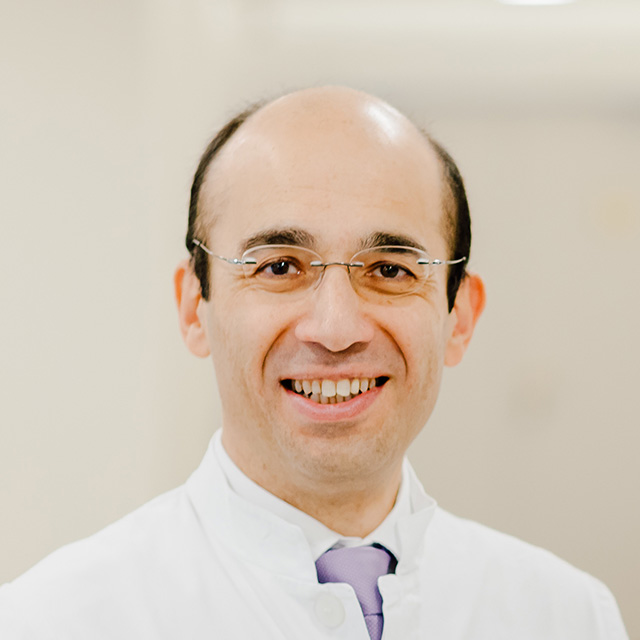
Assoc. Prof. Dr Rafic Kuzbari
Specialist in Plastic, Aesthetic and Reconstructive Surgery
Over 30 years of experience, internationally recognised expert in deep plane and revision facelifts.
-
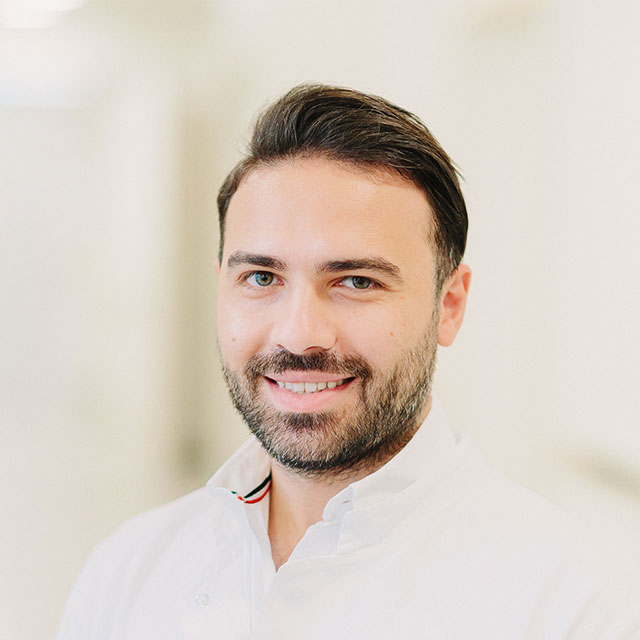
Dr Shawqi Arafat
Specialist in Plastic, Aesthetic and Reconstructive Surgery
Specialist in aesthetic facial surgery with a particular focus on neck lifts, fat grafting and preserving natural expression.